Mapping the eel migration routes
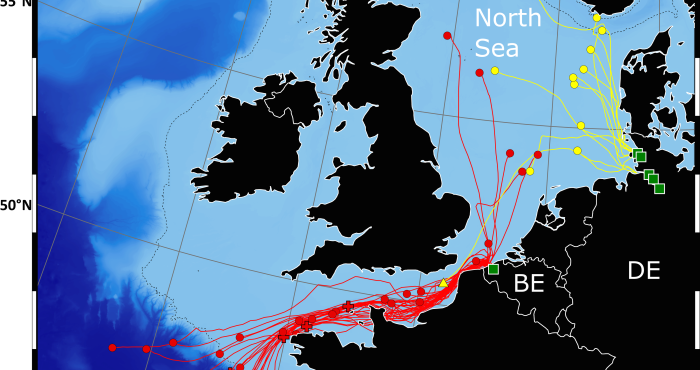
With the use of 96 data loggers, scientists of the Research Institute for Nature and Forest (INBO), Ghent University and the Flanders Marine Institute (VLIZ) succeeded to map the migration routes of eels in the North Sea. The results show that the majority of the Belgian eels migrate through the English Channel, the narrow sea passage between England and France. Although this seems a logical thing to do, some choose to migrate over Scotland. The reason for these different choices is still under study. The eels are probably guided by certain sea currents.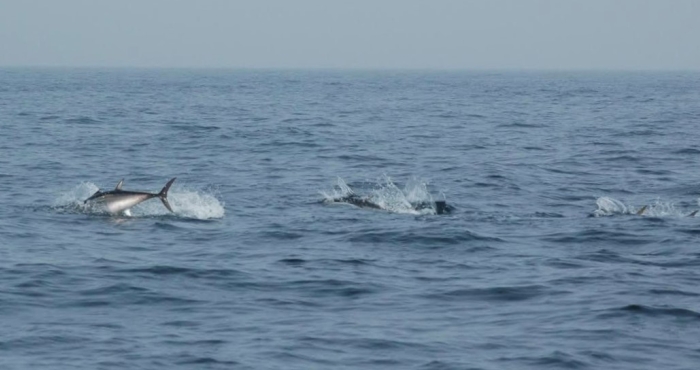
European Tracking Network for fish has reached over 500 million detections
In recent years, fish tracking technology has revolutionized our knowledge on fish migration and behaviour. Today, the European Tracking Network (ETN) integrates the European efforts of hundreds of users, dealing with thousands of tagged fish from a multitude of species. Within this LifeWatch initiative, 500 million detections so far have taught us a lot on fish species such as Atlantic bluefin tuna, European seabass and sturgeon.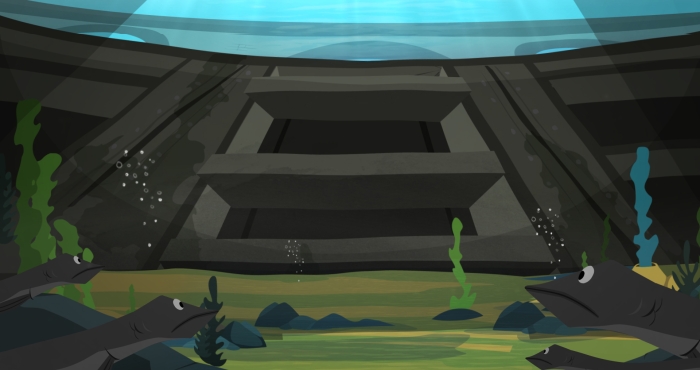
Big Five conservation measures for diadromous fish
Five years of fish tracking research using the LifeWatch fish acoustic receiver network has generated key insights in how to save diadromous fish species from historically low numbers.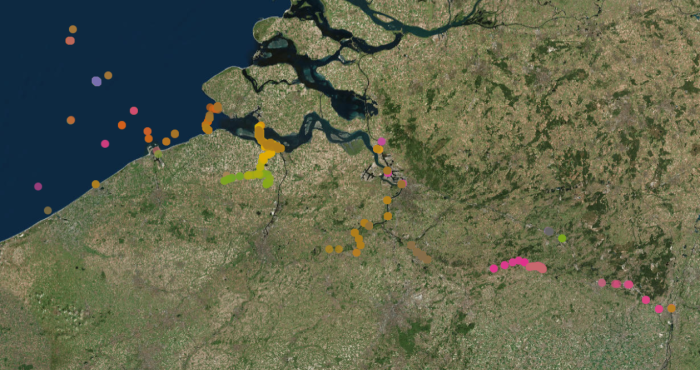
New version of ETN database online
Acoustic telemetry data were already available. But now the ETN database also allow the upload of (meta)data linked to archival tags and acoustic-data-storage tags (ADST).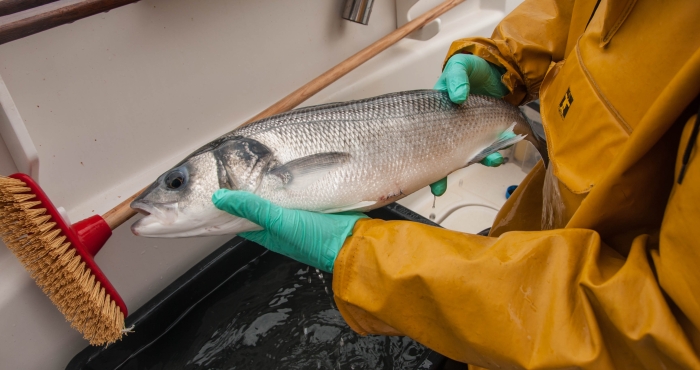
VLIZ recruits: Researcher Marine Observation Centre
Flanders Marine Institute (VLIZ) is looking for a researcher to join its LifeWatch Marine Observation Centre immediately.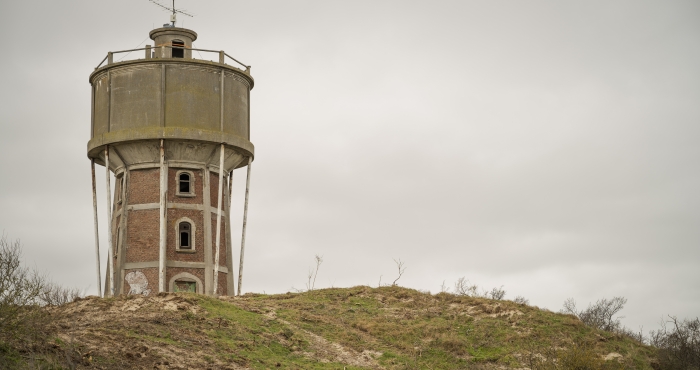
New Belgian antenna station in the MOTUS Wildlife Tracking System
Did you know that bats live along our coast? Moreover, some bat populations travel long distances (sometimes up to 1500 km) and can even fly across the North Sea to the British Isles and vice versa.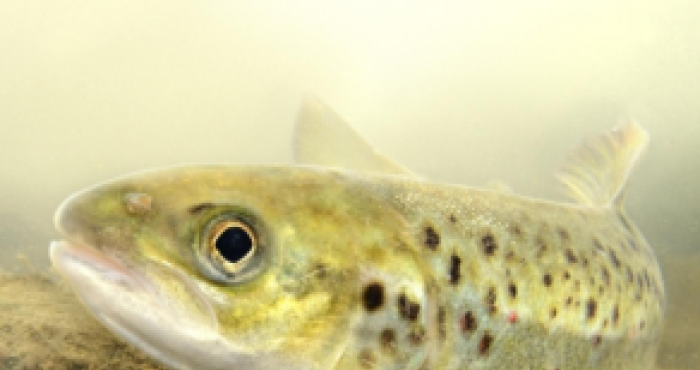
The migratory fish need our help!
Who still remembers that wild Atlantic salmon was once a local product, caught in the Scheldt, IJzer or Maas rivers?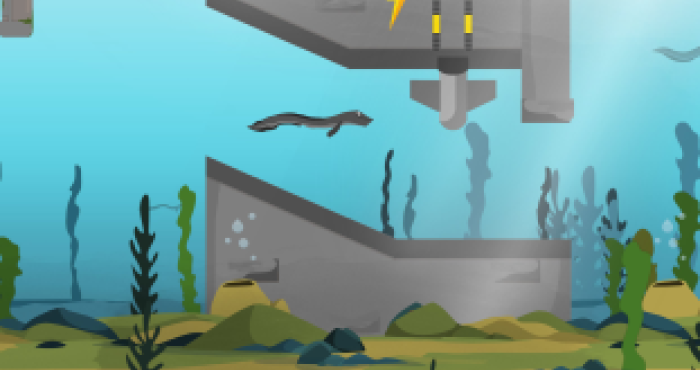
Use your gaming skills to save the eel!
Pieterjan Verhelst, a biotelemetry scientist and frequent user of the Belgian LifeWatch infrastructure developed a game “Save the eel”, to inform the general public about the obstacles eels face during their seaward migration.