Fish Don’t Know Borders: Tracking Aquatic Life Across Europe
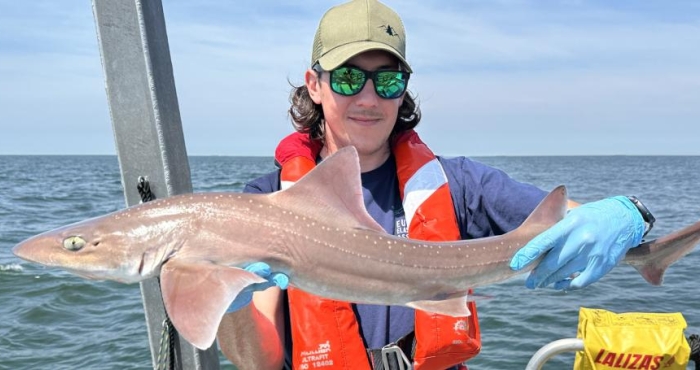
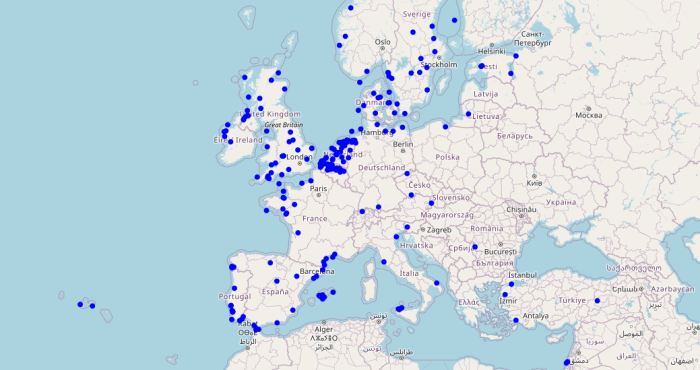
Through the European Tracking Network (ETN), LifeWatch Belgium connects researchers who track fish and other aquatic species across borders. Using a shared network of acoustic receivers, scientists follow animal movements from rivers to seas, revealing how aquatic life links ecosystems throughout Europe.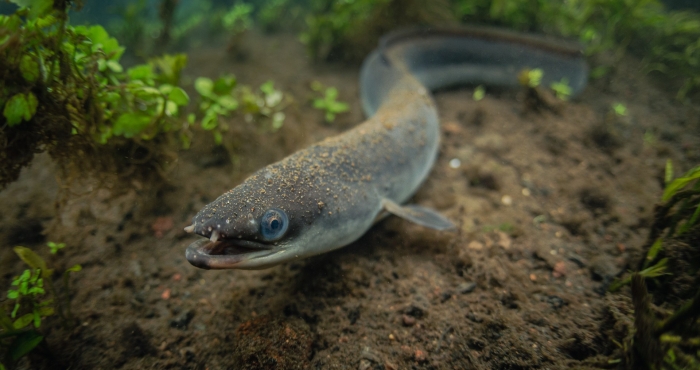
From Europe to the Atlantic: new insights into eel migration
European eels are legendary travelers, undertaking journeys of up to 9,000 km to spawn inthe Atlantic Ocean. A groundbreaking study led by LifeWatch researchers has broughttogether tracking data from more than 2,300 eels across 9 countries, revealing howgeography and river barriers shape the timing of this epic migration.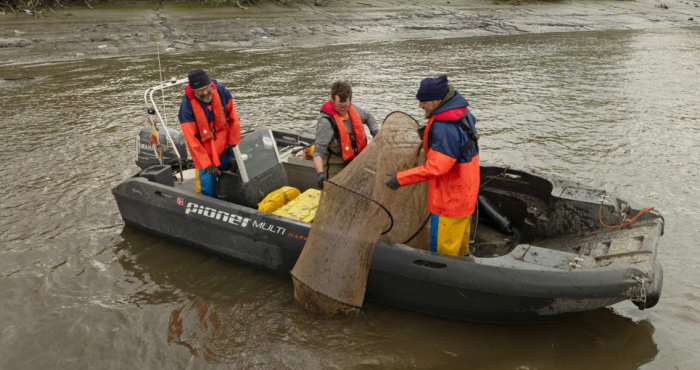
Return of the twaite shad to the Scheldt River After a Century-Long Absence
The twaite shad, a migratory fish that once disappeared from the Scheldt River due to pollution, has made a remarkable return in the past decade. Known locally as the “May fish,” the twaite shadspawns in the river between late April and early May. Researchers from the Institute for Nature and Forest Research (INBO) have been studying the species since its return in 2014, using LifeWatch Belgium acoustic telemetry and data loggers to track the fish’s movements and habits.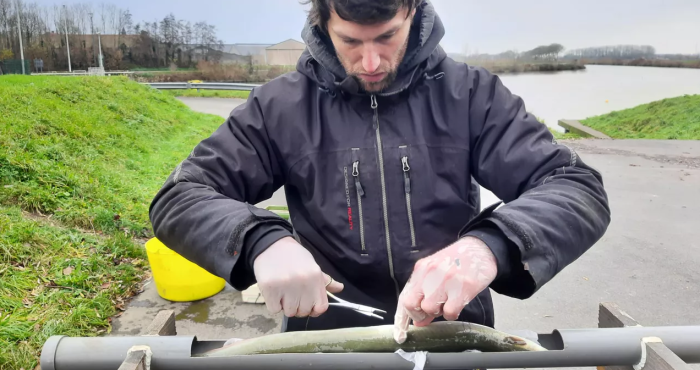
New Study Monitors Fish Migration in the Leie and Scheldt Rivers
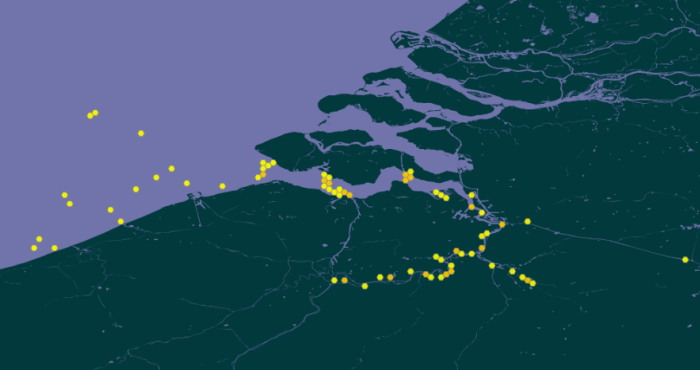
Over recent weeks, researchers from the Institute for Nature and Forest Research (INBO) have deployed an extensive network of detection devices alo
First ETN datasets available through GBIF
The first datasets from the Permanent Belgian Acoustic Receiver Network are now available via GBIF. Over 507,000 fish tracking records from Belgian waters offer new insights into species movement and biodiversity.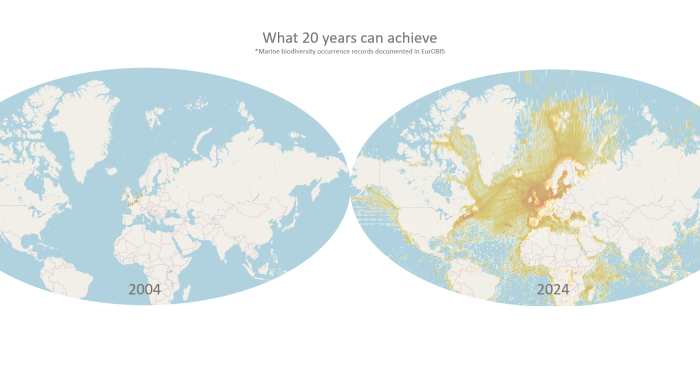
EurOBIS celebrates its 20th anniversary with a super-harvest!
Over its 20 years’ existence, EurOBIS formed alliances with European initiatives as a supporting infrastructure and network. Major milestones include EurOBIS serving as the data backbone of the European Marine Observations and Data Network Biology (EMODnet Biology) since 2009 and being part of the central Species Information Backbone of LifeWatch since 2014.
WoRMS and Marine Regions contribute to the OBIS-GBIF Action Plan for Marine Biodiversity Data
Two global data networks have agreed to a joint strategy and action plan that will deepen their collaboration, improve the flows and services of high-quality data about marine and coastal biodiversity, and support research and decision-making on the world's oceans.
Assessing the state of the oceans
The second World Ocean Assessment – WOA II – is a global exercise by hundreds of marine scientists to evaluate trends and identify knowledge gaps in the world ocean. Two chapters of WOA II have made use of several components of the LifeWatch Species Information Backbone.
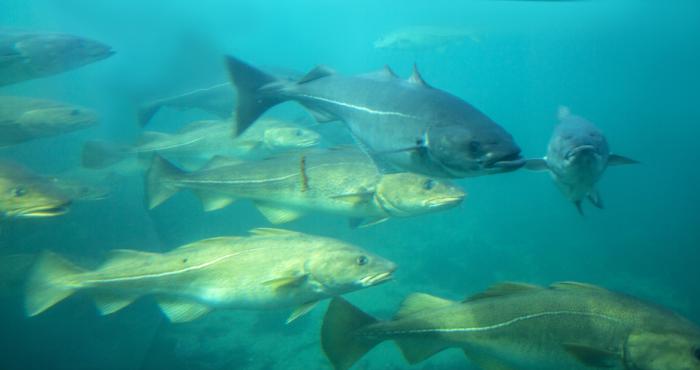
How Atlantic cod behave to seismic sound exposure - a joint industry project
Within the framework of the PCAD4COD project, an integrated set of studies were performed to understand the impact of airgun sounds on fish. This was done through modelling the energy-flow, individual behaviour and population dynamics as well as collecting field data on behaviour, physiology, growth...